

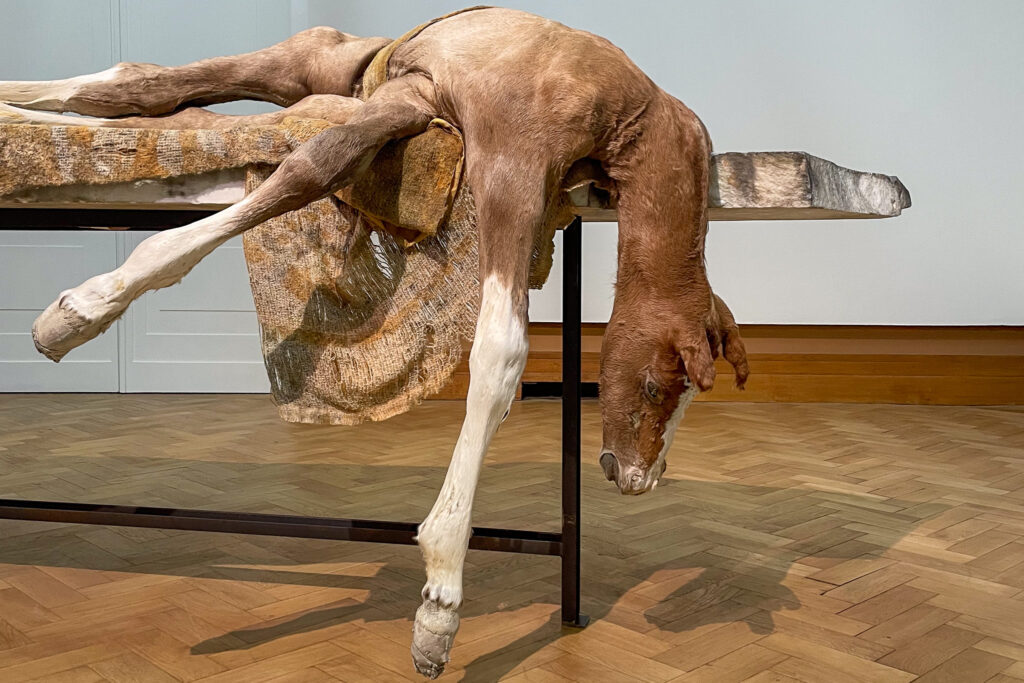
I will start with the conclusion: go see KHORÓS at Bozar, it’s an interesting overview of Berlinde De Bruyckere’s work, a major Belgian female artist in a fabulous art institute.
short story long
Why did it take me four months to write about KHORÓS, the Berlinde De Bruyckere exhibit at Bozar that I saw on February 21? Things got complicated! And then I procrastinated…
My first idea was to write about Berlinde’s work for people who have a hard time grasping it and are just appalled. I can completely relate to that. Fortunately, I had an aha moment in Venice and wanted to share my changed point of view to make her work relatable.
Then, out of the blue, I realised I associated her work with grotesque. I started researching it to be able to resume the thing properly for this article. Unfortunately, there’s not a lot to be found, even at Foyles in London a very helpful salesman couldn’t find a book and suggested I should write it… That’s where it got complicated: I got very much tempted and started researching more thoroughly, which I have been doing all this time. There’s definitely more to be found, and I have had especially interesting conversations with academics of various expertise. I’ll give you a little introduction to the subject.
grotesque intermezzo
The most basic explanation you can find of grotesque in a dictionary is repulsively ugly or distorted.
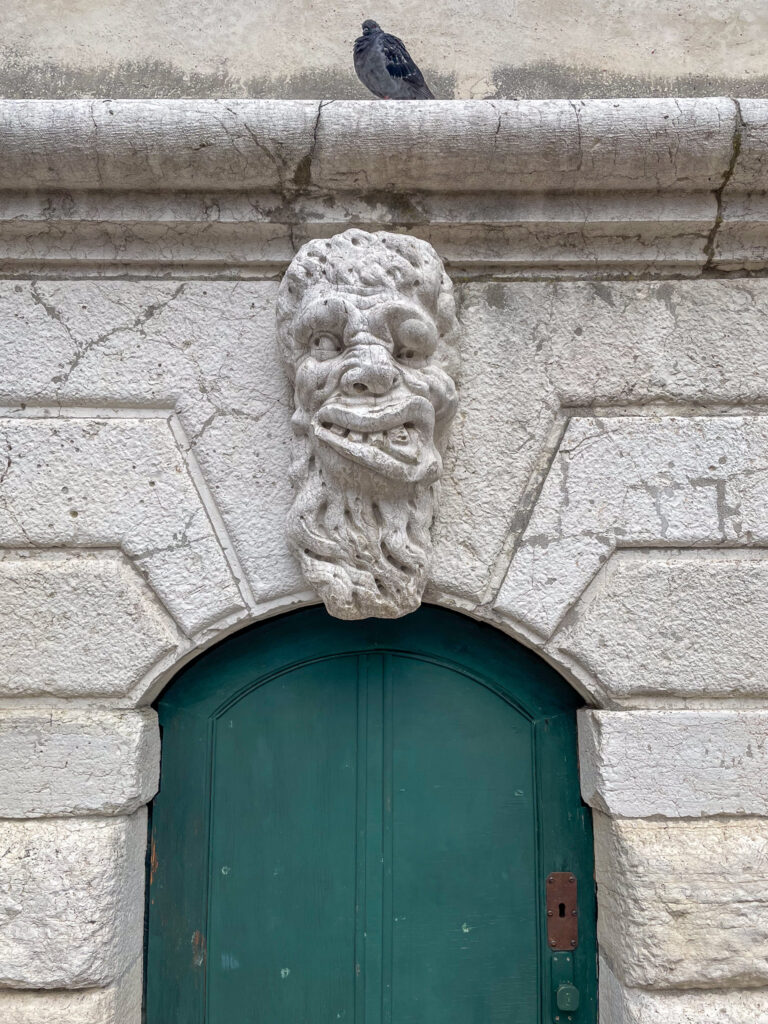
But that is not where it comes from. The word was first used in the 16th century after an artform was discovered during the excavation of Emperor Nero’s which had become overgrown and buried. To access the place, one had to ascend into it, hence the reference to a grotto and the birth of a new word. On the walls were imaginary figures and fantastic shapes of human beings, animals and the like, joined together by wreaths of flowers, garlands or arabesques. So unnatural, yes, repulsive and ugly, not quite, although already adored by some and frowned upon by others right away. The theme then evolved in the 19th century Romanticism, a movement which emphasised intense emotion as an authentic source of aesthetic experience. It granted a new importance to experiences of sympathy, awe, wonder, and terror. Enter: the ugly, distorted, horror part and the association we mostly have with the word today. Quite a topic!
That’s it for now, back to Berlinde.
Venice
Until last September, I could not be bothered to go see Berlinde De Bruyckere’s work. I found it gruesome, too fleshy, and generally speaking unpleasant. But then something happened: I took the time to understand. (It can be as simple as that.)
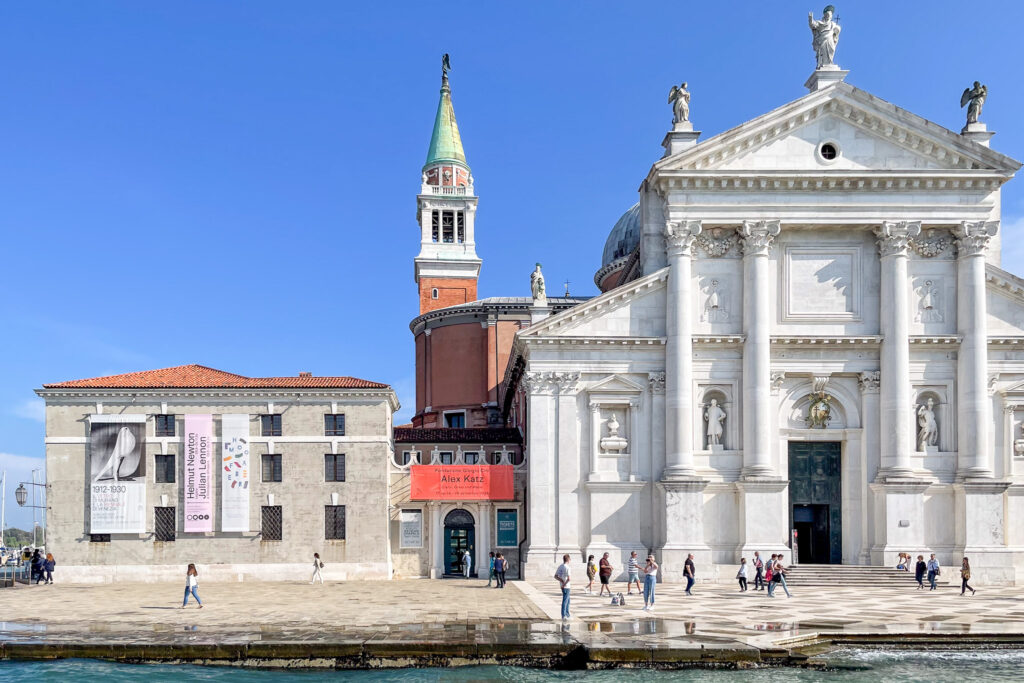
While in Venice for the Biennale, I visited City of Refuge III, a solo exhibition by Berlinde, in the Abbazia di San Giorgio Maggiore. By accident, I started at the end entering at the backside of the church which really was my luck, since I sat down to watch all sorts of videos of former exhibits and interviews of Berlinde about her practice. (You can find them all onYoutube). It plunged me into her work with a proper introduction. I understood her passion for normalising death and decay and started seeing it as a tribute and not a horror show. Her work with its distorted organic forms is indeed there to create unease, but foremost to show human vulnerability and the overwhelming power of nature.
The initial shock really wears of when you embrace the unease. From there, it’s easier to see wood or blankets cast in wax referring to lifeless nature with human traits and appreciate its beauty.
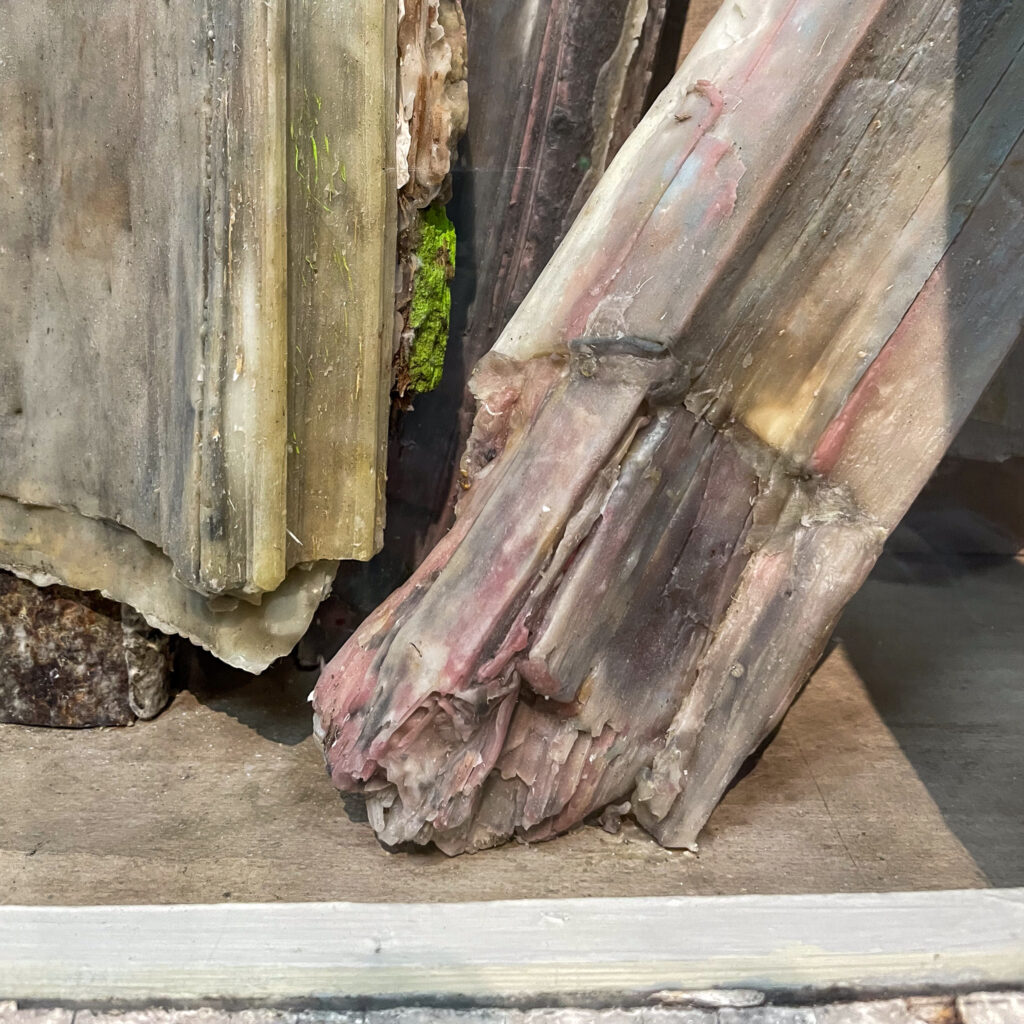
With a backdrop of arches and marble, surrounded by bloody martyrs or Jesus Christ nailed to a cross, seeing Berlinde’s work in a majestic church is a completely different experience that erases any initial repulsion I might have had. In there, hide covered corpse-like figures (archangels) literally hanging between heaven and earth acquire their initial role of messengers. Vitrines presented like reliquary in a place that functions as a refuge or sanctuary, become venerable (they were originally for encapsulating and safekeeping of body parts or possessions of saints). The dualities of love and suffering, danger and protection, life and death, natural and artificial all part of Berlinde’s work were done justice in this exhibition.
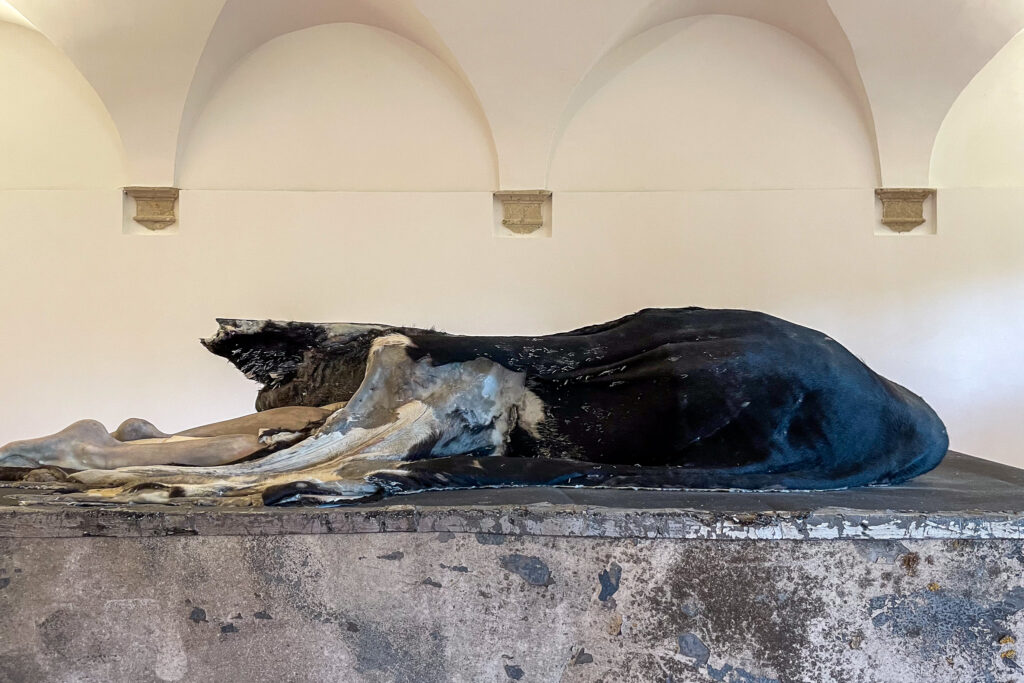
The shared theme of human suffering between the catholic church and Berlinde’s art created a most harmonious dialogue. Both institutes share another common ground: they are places of refuge and safety.
the BOZAR show
KHORÓS is not a retrospective in the classic sense, where the whole oeuvre of an artist is displayed, but it does cover a lot of different periods of Berlinde’s work from the past 25 years. An excellent way to be introduced to her work or dive into highlights again.
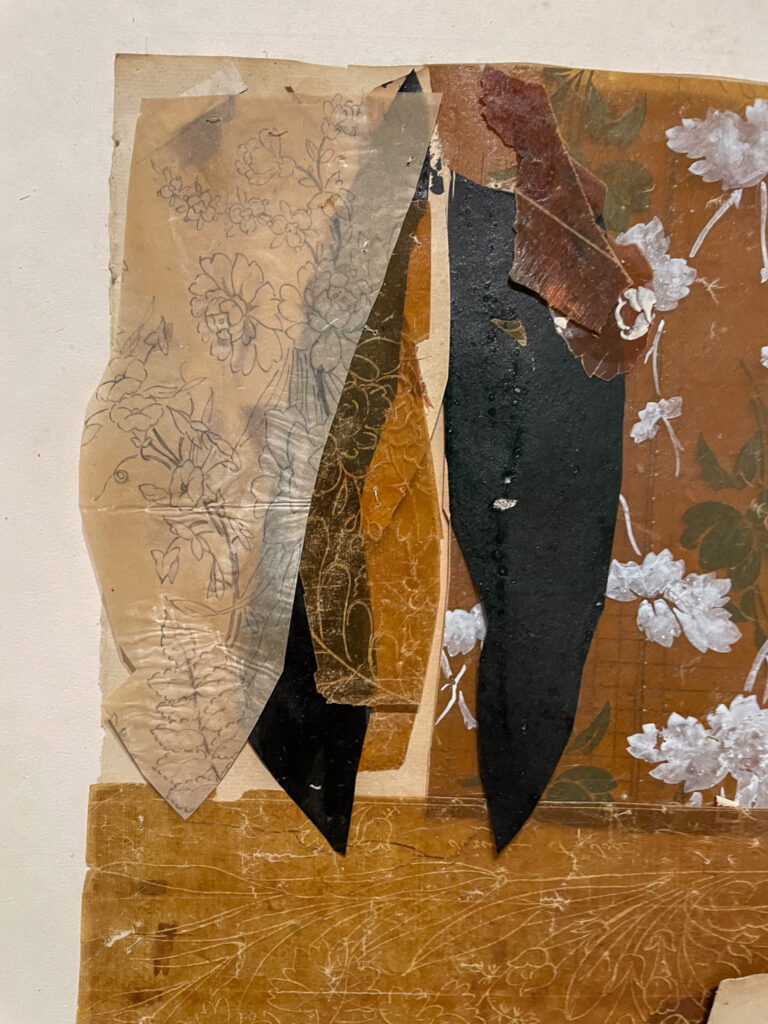
The title of the show refers to the group of singers/dancers in Greek tragedies who expressed appropriate emotions and commented to each stage of the dramatic action or to provide necessary insight. This reflects the idea of dialogues with other artists but these are not obvious and thus unfortunately, quite lost in this exhibit. A missed chance in my opinion to add an extra dimension to the show, since building bridges between artists or artistic periods can make it thrilling to see an oeuvre in a different light. I was really looking forward to that idea that was announced as a new series of Bozar. Curious about future shows on this theme…
That’s it: I’m off to further research into the grotesques and why it’s so uneasy.

(This text was 98% humanly written.)
details and practicalities
Berlinde De Bruyckere. KHORÓS
Until 31 August 2025
Bozar – Centre for Fine Arts (Brussels)